Many people who switch to a ketogenic or carnivore diet start obsessively tracking blood ketone levels in the first few weeks. A number appears, it rises at first, and from that many conclude: the higher, the better. Yet the body’s functioning is far more complex than a single number.
In the initial phase, the body hasn’t yet learned to efficiently utilize the ketones it produces. It’s like a new fuel arriving in the system, but the engine hasn’t yet figured out how to burn it properly. As a result, a portion of the ketones simply accumulates in the blood, leading to high measured values. This isn’t performance—it’s a transitional state.
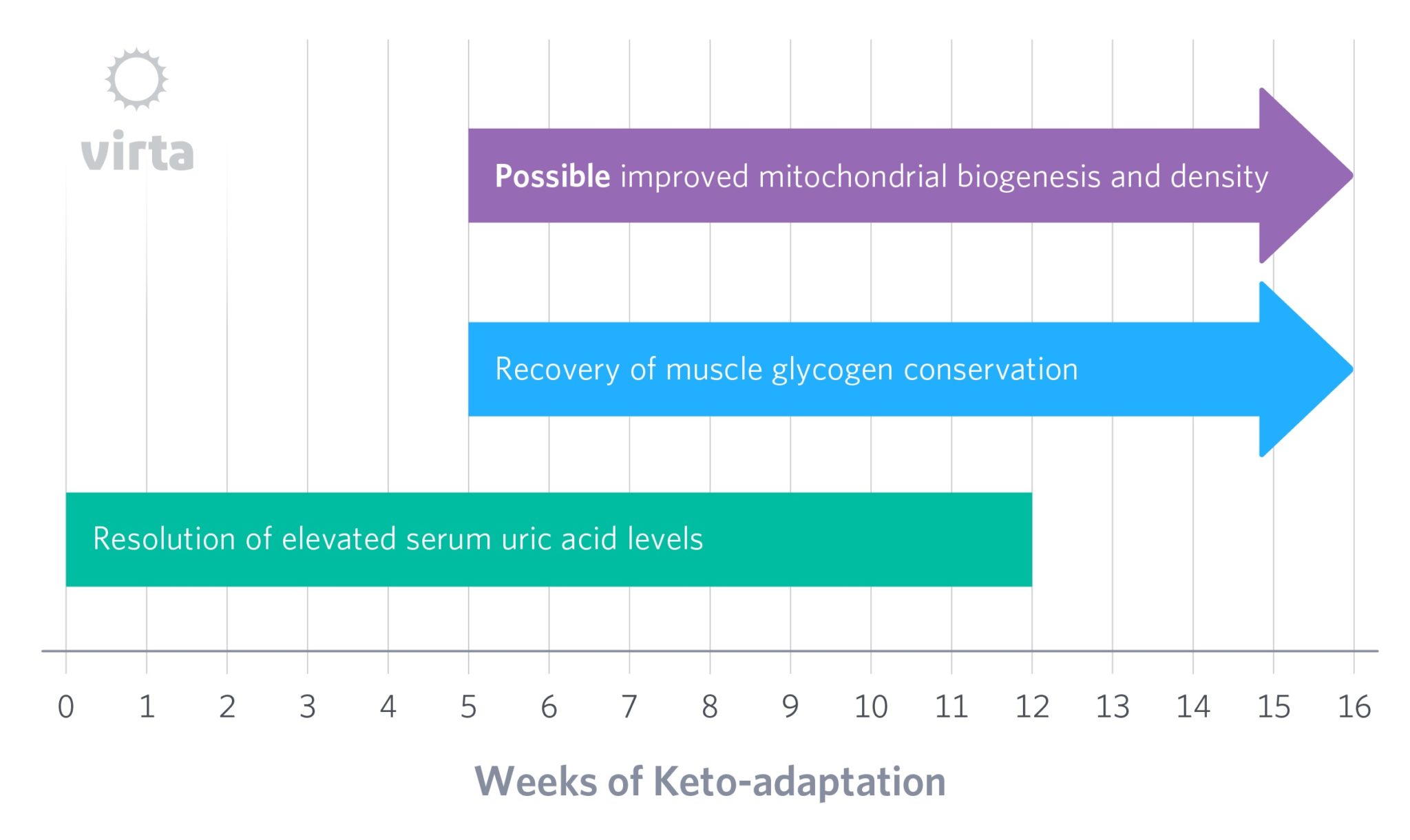
As adaptation progresses, the muscles, nervous system, and cells become increasingly efficient at using fatty acids and ketones as energy. The body learns to produce this fuel continuously and consume it immediately. The consequence: blood ketone levels often drop—even as fat oxidation and access to energy reserves actually improve.
This is the point where many people mistakenly think they’ve “fallen out of ketosis,” when in reality they’ve arrived at a far more efficient metabolic state.
An adapted body doesn’t store ketones—it works with them.
During prolonged effort, this makes a dramatic difference. While carbohydrate-based metabolism relies on limited glycogen stores, a fat-based system provides virtually continuous energy from tens of thousands of calories of reserves. That’s why energy crashes disappear, heart rate stays more stable, and inflammatory load decreases.
High ketone levels, therefore, are not the goal—they are a byproduct of the learning phase. The real goal is metabolic flexibility and efficiency. When the body effortlessly shifts to fat burning, when it doesn’t panic for sugar under load, and when the nervous system doesn’t switch to emergency mode at the end of long sessions.
This is especially observable in athletes. After intense or prolonged training, ketone levels are often lower—yet well-being is excellent, heart rate normalizes quickly, and recovery is surprisingly fast. This isn’t a flaw; it’s a sign that the fuel was actually used.
The functional carnivore approach therefore doesn’t chase numbers. It doesn’t aim for record ketone levels—it aims for stable operation. The body’s purpose isn’t to produce ketones; it’s to supply energy with the least possible stress.
When this happens, performance doesn’t fluctuate. It simply becomes present.
That is the true measure of adaptation.