Why Do Digestive Problems Disappear in Fat-Based Metabolism?
In endurance sports, we almost take it for granted that digestive issues will eventually show up during longer efforts. Bloating, nausea, diarrhea, cramps, reflux—most people don’t ask if it will happen, but when. As if it were an inevitable part of ultra distances.
In reality, the effort itself isn’t the cause. The metabolism and fueling strategy are.
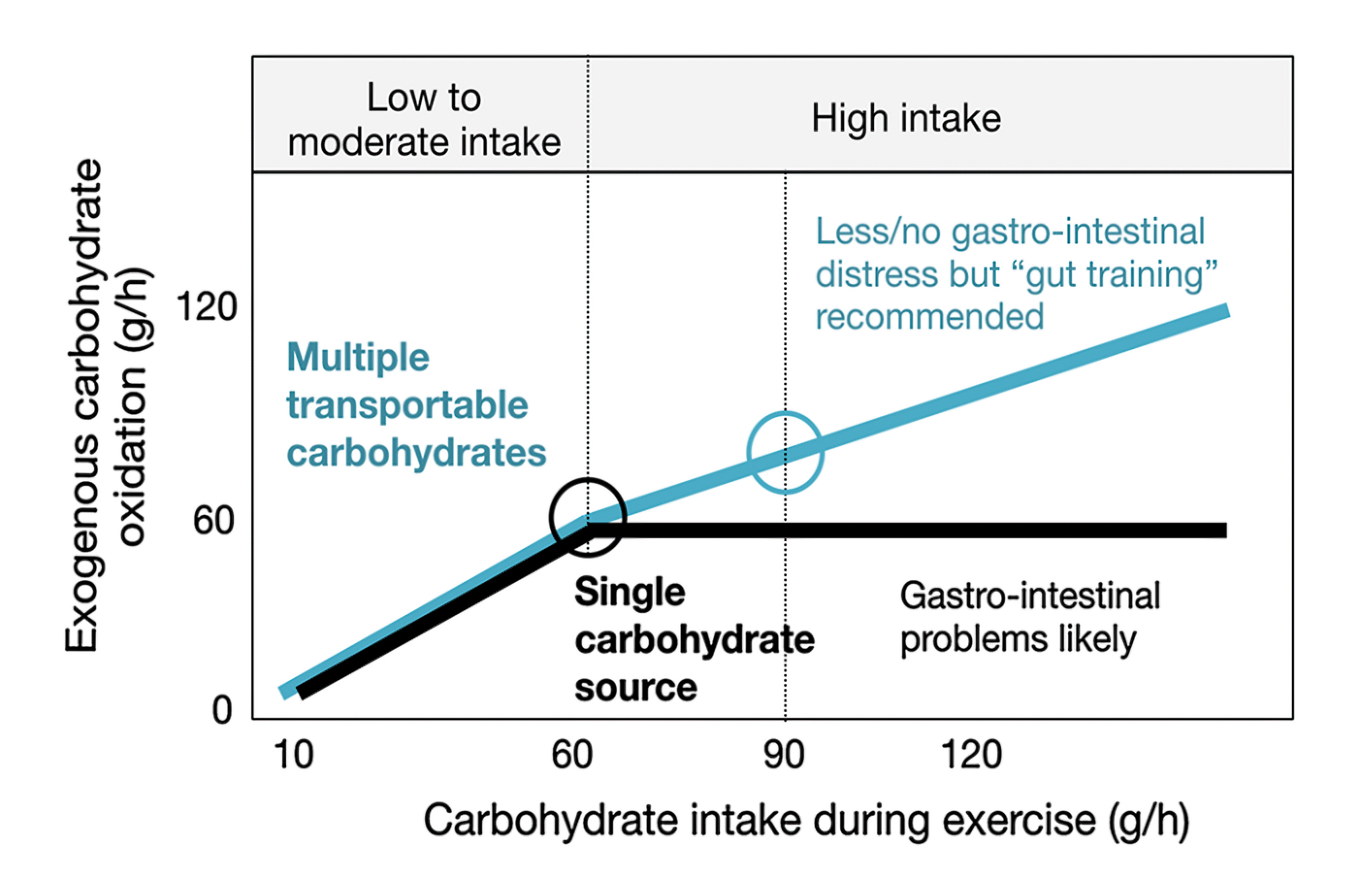
In carbohydrate-based metabolism, the digestive system is under constant load during exercise. Blood flow is heavily redirected to the working muscles and skin for cooling, leaving the gastrointestinal tract in a state of relative hypoxia. Into this environment arrive large amounts of sugars, concentrated drinks, gels, and often highly processed ingredients. Absorption slows, osmotic load increases, the gut lining becomes irritated, and parts of the bacterial flora trigger fermentation processes.
This isn’t a flaw—it’s a biological consequence.
The body simply isn’t designed to process rapid-absorption carbohydrates continuously under stress.
When someone adapts to fat oxidation, the role of the digestive system changes dramatically. Fueling no longer relies on constant carbohydrate intake; it shifts primarily to fluids and electrolytes. Most of the energy comes from internal stores, so the stomach is no longer forced to work nonstop during effort.
This alone represents an enormous reduction in load.
But the process goes much deeper.
Stable blood sugar eliminates the insulin and stress spikes that increase gut permeability. In carbohydrate-dependent states, hormonal stress during exercise tends to make the intestinal wall “leakier,” leading to inflammation, discomfort, and immune reactions. In fat-based metabolism, this stress is significantly reduced.
Ketone bodies—especially beta-hydroxybutyrate—exert anti-inflammatory effects in the gut as well. The mucosa enters a calmer state, irritation decreases, and barrier function improves. The microbiome composition gradually shifts toward strains associated with less gas production and lower inflammatory activity.
The practical result is straightforward: the stomach stops fighting.
During long efforts, nausea fades away, bloating becomes rare, urgent bowel urges disappear, and energy no longer “sits” uncomfortably in the gut. The athlete can focus on movement instead of digestion.
This becomes an invaluable advantage especially at ultra distances. When fueling doesn’t overload the system, the nervous system doesn’t go into emergency mode. Heart rate stays more stable, hydration is more effective, and mentally it’s far easier to handle the long hours.
It’s important to emphasize that this doesn’t happen overnight. Adaptation takes time. The gut itself must adjust to the new metabolic environment. But when it does, most digestive problems simply vanish—not managed, but rendered unnecessary.
Fat-based metabolism therefore doesn’t just switch energy systems. It unloads the stomach, reduces inflammation, stabilizes the hormonal environment, and restores digestion to its natural role: a quiet, background support system.
In ultra distances, this is often a bigger performance gain than any pace increase.